
The Backrooms We Carry

DISCLAIMER: This is not necessarily what the filmmakers intended. It’s simply what I walked away contemplating after seeing The Backrooms, a film directed by Kane Parsons and starring Renate Reinsve, Mark Duplass, and Chiwetel Ejiofor.
Spoiler Alert: This story contains discussion of major plot developments in The Backrooms, including its ending.
I walked into The Backrooms movie expecting horror.
What I didn’t expect was to leave thinking about mental illness.
Most viewers seem to interpret The Backrooms as an alternate dimension: a vast maze of yellow hallways, impossible spaces, and lurking monsters. But the longer I sat with the film, the more convinced I became that The Backrooms are not a place. They’re a metaphor for the hidden interior worlds we all carry.
Not just one person’s world.
Everyone’s.
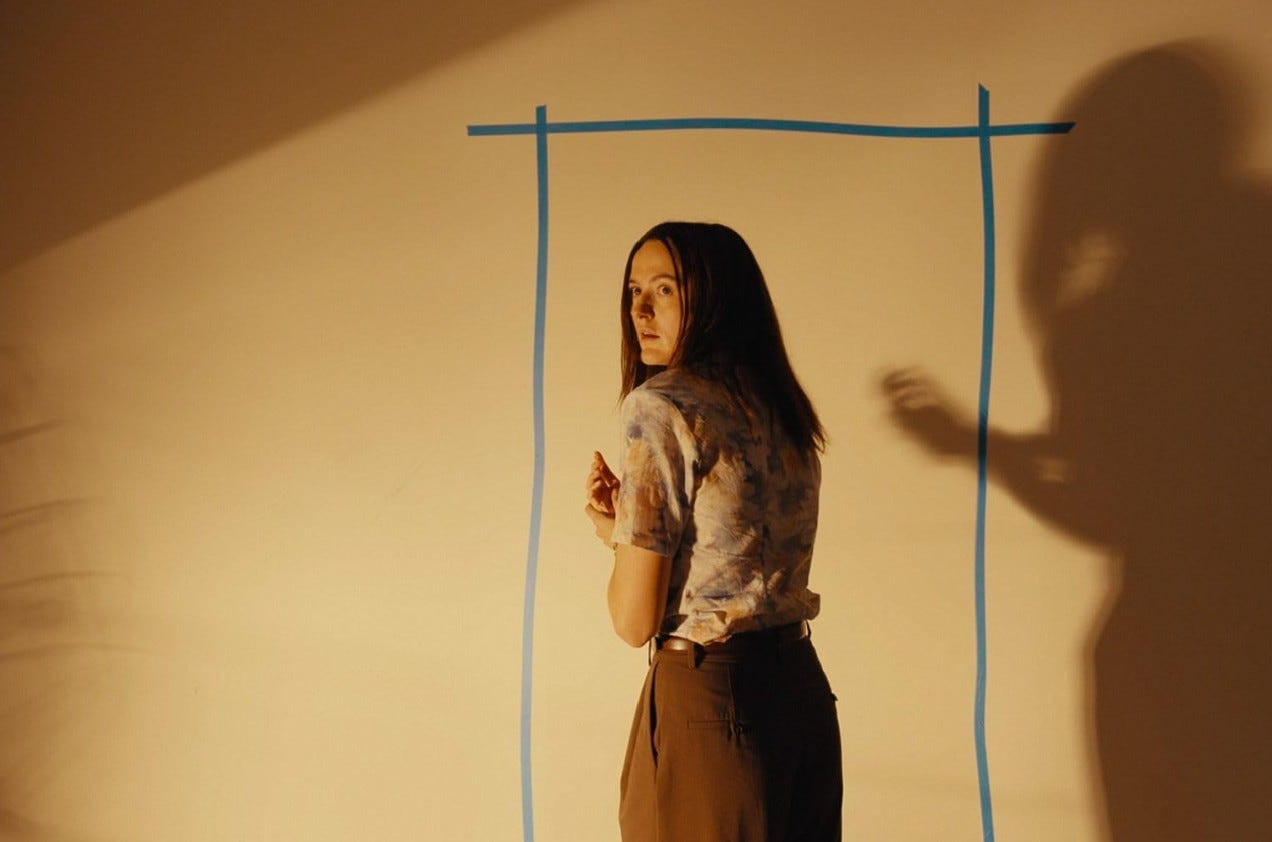
The clue, for me, was the therapist Mary.
As a child, she watches her mother being wheeled away through the sterile corridors of a psychiatric institution. It is a haunting scene because it captures the limits of what we can see from the outside. Young Mary doesn’t know what her mother is experiencing. She only knows that something terrible is happening and that her mother is disappearing.
That is often our experience of mental illness.
We see the symptoms. We see the behavior. We see the consequences.
We do not see the labyrinth.
The film suggests that behind every diagnosis, every breakdown, every act that appears irrational from the outside, there may be an entire internal landscape that remains invisible to everyone else.
What if The Backrooms are that landscape?
I think we all have Backrooms of our own making.
Some are built from grief. Some from trauma. Some from obsession, fear, loneliness, addiction, anxiety, or loss. Most of us spend our lives navigating them whether we realize it or not.
They are different for each person.
Yet sometimes they overlap.
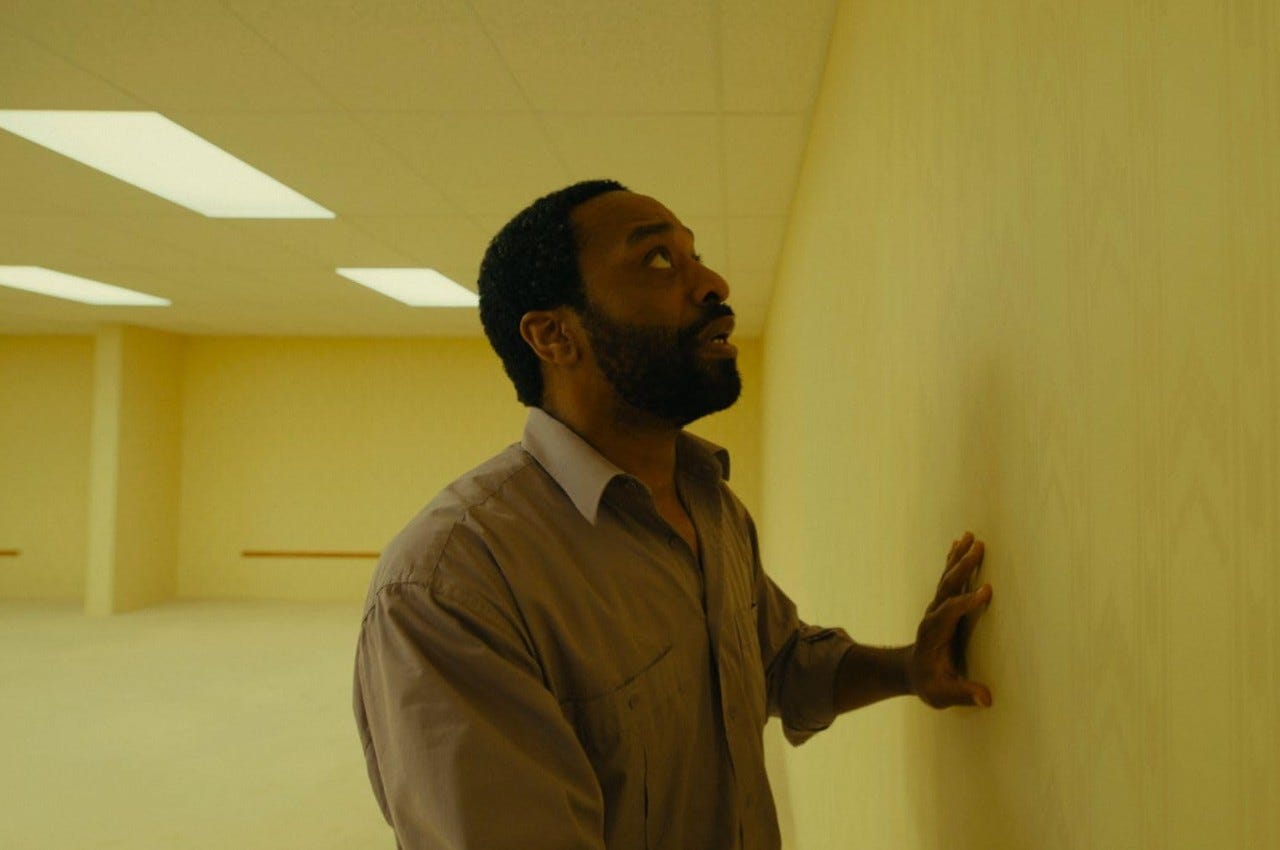
That overlap may explain why Mary’s reaction to her patient, Clark, is so unusual. When he begins describing The Backrooms, she doesn’t react with disbelief. There is fear in her eyes, but there is also recognition. Something in his description touches a place she already knows.
Not because they share the same Backrooms.
Because their labyrinths intersect.
The Handprint
Throughout the film, Mary carries the cement imprint of her hand from childhood.
At first it seems like a keepsake, a tangible connection to a happier time. But the more I thought about it, the more it felt like something else: a physical representation of a moment she never truly left behind.
An imprint is a mark made by pressure. Something leaves its shape behind long after the original moment has passed.
That is what childhood trauma often feels like.
Mary grows up. She becomes a therapist. She builds a life. Yet she still carries that imprint in her pocket. Not a photograph. Not a memory. An impression frozen in time.
The handprint serves as a reminder that while we move forward chronologically, parts of us remain fixed in the moments that shaped us. The child who watched her mother disappear into a psychiatric institution never entirely left.
She carries the imprint of that trauma with her.
When Mary enters The Backrooms, she puts the cement imprint of her hand in her pocket. She brings the unanswered questions with her. She brings the wound with her.
That may also explain something else that struck me.
Most people, myself included, would immediately run in the opposite direction if they stumbled into a place like The Backrooms. We would leave the store immediately, call for help, and never return.
Mary doesn’t.
Neither does the main protagonist, her patient, Clark.
They wander deeper.
At first that felt unrealistic. Then I realized it wasn’t exploration I was watching. It was compulsion.
People often move toward the very thing that frightens them most. They revisit old wounds. They chase unanswered questions. They become obsessed with understanding what hurt them.
Mary is not exploring a mystery.
She is following a thread she has been carrying since childhood.
The People We Bring With Us
One detail that lingered with me was Clark’s decision to bring his two furniture store employees with him into The Backrooms to document the spaces on film.
On a literal level, they are simply helping him film and investigate. But viewed through a psychological lens, their presence feels more significant. They are ordinary people pulled into someone else’s madness and obsession.
Mental illness, addiction, grief, and trauma rarely affect only the person at the center of the story. Family members, friends, colleagues, and loved ones are often drawn into the orbit as well. They did not create the labyrinth, yet they find themselves wandering its corridors alongside the person who did.
The two young employees struck me as symbols of that collateral damage. They suffer because they chose to follow someone who could not stop chasing the madness.
The film seems to understand a painful truth: when one person descends into darkness, innocent people are often pulled downward too.
The Monster in the Maze
The monster that ultimately kills Clark resembles him.
That detail feels impossible to ignore.
Most horror stories end with a confrontation between the hero and an external threat. This film does something more unsettling. The final enemy appears to be a distorted grotesque version of the man himself.
If The Backrooms represent a descent into obsession, madness, or psychological disintegration, then the ending takes on a tragic dimension. He is not destroyed by the maze. He is destroyed by what the maze has transformed him into.
The monster is not merely hunting him. The monster is him.
Viewed this way, it feels like metaphorical suicide. Maybe even a literal one. The labyrinth does not kill him directly. Instead, it nurtures a darker version of himself until that version becomes powerful enough to take his place.
What makes this even more fascinating is that the monster eventually pursues Mary.
That feels significant because the creature was once her patient.
In a sense, he leads her into the labyrinth.
As a therapist, Mary spends her life helping others navigate their hidden worlds. Then one of those worlds reaches back and pulls her inside.
The patient becomes both victim and guide.
He is the first person whose description of The Backrooms resonates with something buried deep within her. The monster’s pursuit of Mary therefore feels less like a predator hunting prey and more like a warning.
This could become you.
The Observer
That brings me to the researcher played by Mark Duplass.
When Mary is finally found, she is bloodied, disoriented, cleaned up, dressed in white, and examined. MRI images of her brain appear on monitors while she is asked careful questions about what she experienced.
The imagery feels unmistakably medical.
Duplass is curious. Compassionate. Almost humble.
“What did you see in there?” he genuinely wants to know.
He has spent his life studying this place. He has data. He has scans. He has theories.
Yet when confronted with someone who has actually been inside the labyrinth, he does not claim certainty.
He listens.
In that sense, he may represent psychiatry, neuroscience, and medicine itself…all disciplines attempting to understand mental experiences they can observe but never fully enter.
The MRI can image a brain.
It cannot image The Backrooms.
Only the person who has wandered there can describe it.
Perhaps that is why Mary smiles when he admits he doesn’t know whether she can leave. That’s a question only she can answer.
Some wander through the corridors. Some become trapped. Some can escape.
And others are relegated to the sidelines, just studying The Backrooms from the outside.
This film affected me so deeply.
It wasn’t really about monsters.
It was about the hidden worlds people carry inside them and the humbling realization that no matter how much we love someone, we may never fully know the shape of the maze they are walking through or how to reach them once they venture too far inside.
Really insightful!
Love your analysis - haven’t seen the movie. Maybe a “spoiler alert” at the beginning could warn readers in case for instance my cousin would recommend this movie to me ;).